
The practical module
Reconstitution, made clear.
How peptides go from a dry powder in a vial to a usable liquid — the math, the steps, and the technique. No formulas to memorize. You’ll feel it click.
A note on what this is — and isn’t
This page explains how peptide reconstitution is done as an industry and laboratory standard, and what clinical research and the community report. We are not telling you to do this, and not telling you what dose to take. That decision is yours. Our job is to make sure that if you do proceed, you understand the correct, clean technique — because most of what goes wrong in this space comes from getting the simple steps wrong.
See our full disclaimer for more.
Four words to know
Everything else is just these four, combined.
mg
Milligrams — how much peptide powder is in the vial. The amount of “stuff”.
mL
Milliliters — how much liquid (water) you add.
Concentration
How strong the mix is — how much medicine sits in each drop of water.
Units
Fine markings on a U-100 syringe. 100 units = 1 mL.
The secret: when you mix the powder into the water, the medicine doesn’t disappear — it spreads out. That single idea is the whole subject.
The math, without the headache
If mg/mL makes your eyes cross, don’t fight it — just drag the slider below and watch the vial. No numbers to hold in your head.
Drag the water. Watch the vial.
Pick your vial's strength, then choose how much water. The vial below shows exactly what that does — and how much you'd draw for the dose you want.
Your vial's strength (mg)
Dose you want (mg)
Water
2.0 ml
Strength
10 mg
Concentration
5.00 mg/ml
Drag the handle — the vial fills as you go.
To get 2mg of the medicine, draw:
0.40
ml
≈ 40 units on a U-100 syringe
The big rule: adding more water never changes the dose. It only changes how much liquid you draw. More water = more diluted = more units. Less water = more concentrated = fewer units. Same medicine, different volume.
Reconstitution calculator
Pick a peptide, see its info, and check the math for a typical vial. Adjust vial size, BAC volume, and dose to understand the relationship.
Reconstitution Calculator
Understand the math — pick a peptide, see its info, and how reconstitution works.
BPC-157
Healing & recoveryThe repair peptide everyone in the gym talks about — powerful in rats, still unproven in humans.
BPC-157 is a short chain of 15 amino acids. It is not a natural hormone your body makes on its own. It was built in a lab as a fragment of a larger 'body protection compound' first found in human stomach juice in the 1990s. Vendors sell this engineered piece, not a natural sequence.
How it works (optional detail)
In animal studies, BPC-157 seems to nudge faster blood-vessel growth at injured spots, which is the body's first step in healing. It also appears to quiet inflammation. The idea is that by activating repair pathways rather than ordering one single thing, it helps tendons, ligaments, and gut lining recover speedier than they would on their own.
Dosing reference: Common community dosing is a few hundred micrograms a day, usually injected near the site or into belly fat. There is no approved human dose.
Reconstitution math
Concentration: 5.000 mg/ml (10mg in 2ml)
To get 1mg, draw:
0.200 ml
≈ 20 units on a U-100 insulin syringe
This calculator shows how the arithmetic works using common vial sizes. It is an educational illustration — not a dosing recommendation. Always follow the specific product's instructions and verify with primary sources or a qualified professional.
The process, step by step
The industry-standard clean technique, in plain language.
What you’ll need
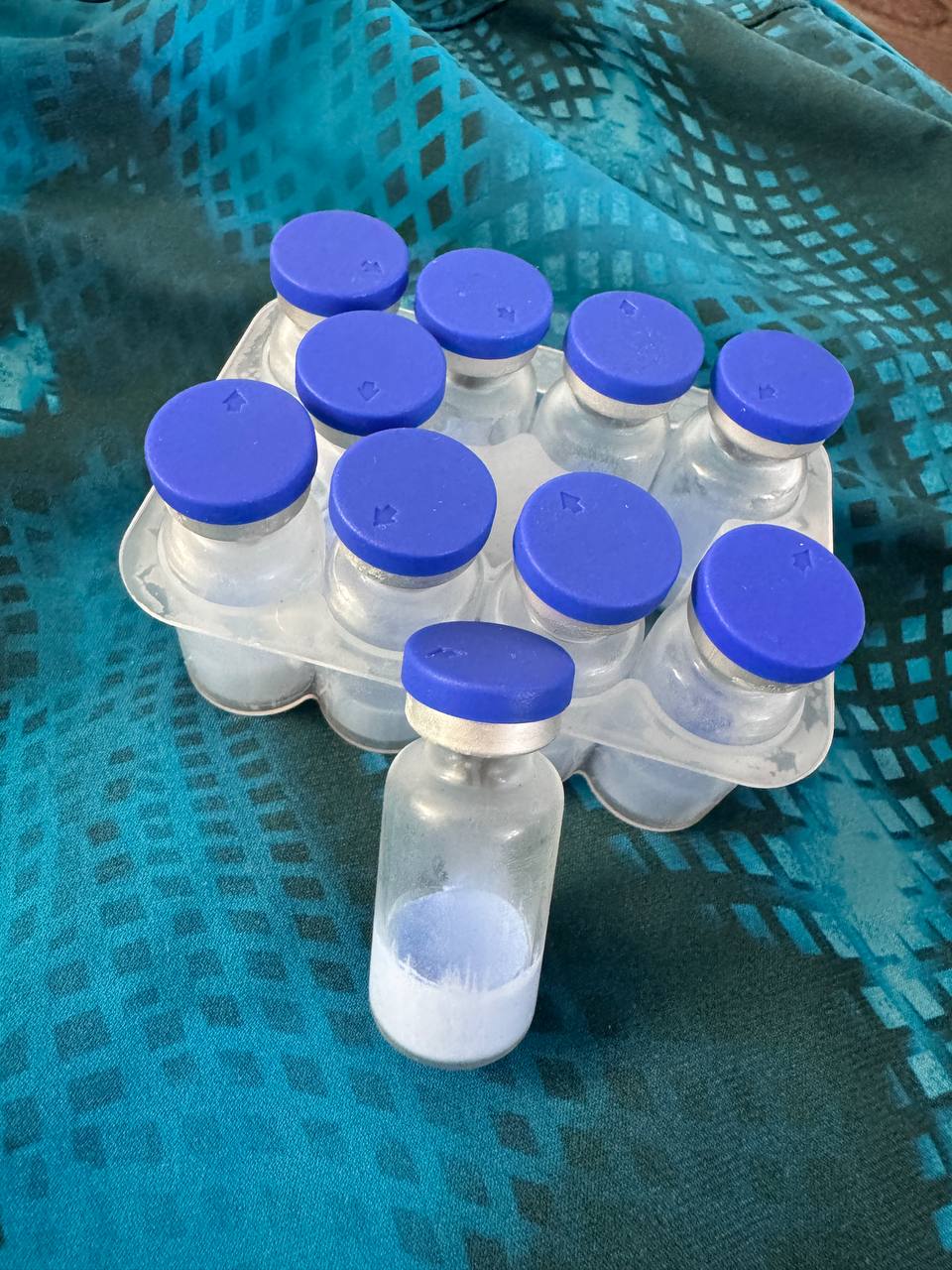
- • The lyophilized (freeze-dried) peptide vial
- • Bacteriostatic water (BAC water)
- • Alcohol prep pads / antiseptic wipes
- • A syringe for adding BAC water (e.g. 3ml 23G)
- • A syringe for measuring your dose (e.g. U-100 31G)
- • A clean, flat work surface
Find trusted supplies on our Supplies page.
- 1
Sanitize your workspace
Clean and dry a flat surface. Wash your hands. Lay out the peptide vial, BAC water vial, alcohol pads, and your two syringes.
- 2
Clean both vial tops
Wipe the rubber stopper of the peptide vial AND the BAC water vial with an alcohol prep pad. Let them air-dry a few seconds.
- 3
Draw the BAC water
With the larger syringe (often a 3ml 23G), draw the correct volume of BAC water. Tap out air bubbles and gently expel air (not liquid).
- 4
Inject BAC water slowly
Insert the needle straight through the center of the stopper at a slight angle. Slowly add the water down the inside wall — not directly onto the powder — to reduce foaming.
- 5
Gently dissolve
Remove the needle. Roll the vial between your fingers or swirl to dissolve. Shaking is not the disaster the forums claim — these chains survive a lot of handling — but gentle is still the smarter default, especially for delicate glycoprotein hormones like HCG. It should become a clear liquid within a minute or two.
- 6
Calculate your dose
Once dissolved it has a concentration (mg per ml). Use the calculator to find how many units to draw for the dose you're considering.
- 7
Refrigerate and track
Label the vial with the reconstituted date. Store per product guidance (most refrigerated). Use within the window — never past discard.
Critical quality checks
- Check the COA — confirms purity and that the batch was tested.
- Visually inspect the powder — should be a uniform cake. Melted, discolored, or already-wet = reject it.
- Use BAC water — not plain sterile water, which doesn’t inhibit bacterial growth after the vial is punctured.
- Roll, don’t force-shake — a gentle swirl is all you need. The anti-shaking fear is overstated (these chains survive shipping and handling), but hard shaking buys nothing — gentle is the smart default, especially for delicate glycoprotein hormones like HCG.
- Store properly — most reconstituted peptides are refrigerated and used within ~28 days.
Educational content — not medical advice. Technique is explained so you understand how it is done correctly; it is not a recommendation to do it.
Myths that waste good product
Most of the fear in this space is recycled forum lore repeated until it sounds like fact, then mined back out by search engines. Here are the ones that cost people the most.
“They’re basically steroids.”
Truth: No. Anabolic steroids are synthetic testosterone that force growth by brute force. Peptides are signaling molecules that nudge a system the body already runs — different molecule, different mechanism, different risk profile.
“My powder is clumped, so it’s ruined.”
Truth: No. Freeze-dried peptide can arrive as a disc, a thin film, a loose cake, scattered flakes, or a layer so light the vial looks empty — all normal. The drying process isn’t standardized, so powder shape tells you nothing about quality. A clump is not degradation.
“Never shake the vial or you’ll shatter the peptide.”
Truth: This one refuses to die. These chains survive shipping, sloshing, and lab handling — a swirl to dissolve does not break them. Hard shaking buys nothing, and a few delicate glycoprotein hormones (HCG being the common one) do deserve a gentle swirl, but the monk-like fear of any motion is overblown.
“It hit room temperature in the mailbox — it’s dead.”
Truth: A properly dried lyophilized vial is extremely stable. It doesn’t spoil because a truck was warm for a day. The cold-chain anxiety online is mostly recycled caution with no lab data behind it.
“Cloudy after mixing = bad.”
Truth: Not necessarily. Some peptides go slightly hazy or throw a few fine particles right after water goes in, then clear as they finish dissolving — give it 10–15 minutes. What warrants a pause is a solution that stays visibly cloudy, discolored, or full of persistent floaters long after mixing.
“More is better.”
Truth: These are signaling molecules — the point is to ask a system to respond. Past a certain point, flooding it produces no bigger effect, only higher odds of side effects and wasted product. Dose is a lever, not a throttle.
How to store them
The short version: freeze-dried powder is far tougher than the internet claims. The clock really starts the moment you add water.
◆Powder (lyophilized)
A dry, undissolved vial is remarkably stable — far more than the drizzle of caution online suggests. Rough, realistic ranges for mainstream peptides:
- Room temp (~20–25°C)months–years
- Refrigerator (2–8°C)years
- Freezer (−15 to −25°C)decades
- Ultra-low (below −40°C)effectively forever
A warm mailbox for a few hours does not kill dried powder. The “1 year” on a label is usually just how long the stability study ran — not a spoilage date. What actually hurts: repeated temperature swings, so pick a spot and leave it there.
◈Reconstituted (mixed)
Once water is in, the clock starts. A mixed vial lives in the refrigerator, out of direct light, and is used within a few weeks. The exact window depends on the peptide and the water.
- Bacteriostatic water (with benzyl alcohol, a preservative) stretches usable life well past plain sterile water.
- Label the vial with the date and how it was mixed, so nothing depends on memory.
One rule with no exceptions
A reconstituted vial does not go in the freezer. Freeze-thaw cycles stress the peptide and buy nothing. Keep it cold in the fridge between uses.